Every morning, millions of South Africans wake up, buy food from a shop, pay rent to a landlord, buy airtime, use transport, and move money through systems owned bypeople they will never meet. By the end of the day, wealth has moved. It has moved from households into retail chains, from workers into landlords, from villages intoEvery morning, millions of South Africans wake up, buy food from a shop, pay rent to a landlord, buy airtime, use transport, and move money through systems owned by people they will never meet. By the end of the day, wealth has moved. It has moved from households into retail chains, from workers into landlords, from villages into distant suppliers, from townships into banks that decide the future of communities they have never visited.This is not an accident. It is not bad luck. It is an arrangement, designed by people and serving certain interests. And arrangements can be changed.The economy is not a natural phenomenon like rain or gravity. It is made up of rules, ownership patterns, institutions, supply chains, and decisions about whose interests come first. The question is therefore not only whether the economy is growing. The deeper question is: who owns and controls it?
The ownership question
We are often taught to experience the economy as if it is neutral. Prices rise. Jobs disappear. Communities decline. We are told this is simply the market at work. But the market is not neutral. It reflects who owns land, controls finance, dominates retail, and has authority over what is produced, where, and for whose benefit.In South Africa, this has a clear history. The economy was structured under colonialism and apartheid to serve a minority. Land was dispossessed. African labour was made cheap. Cheap for the bosses. Communities were deliberately underdeveloped. The formal structures of apartheid have been dismantled, but the ownership patterns have proved far more durable.This is why freedom, while historic and indispensable, has not automatically produced economic freedom. A person may have the right to vote and still have no control over land, credit, food systems, or the local economy. Ownership without control is not transformation.Every day, working people produce the wealth of society. Yet when profits are counted and investment decisions made, the majority are spectators. They work in the economy. They do not own it.
The township and village economy
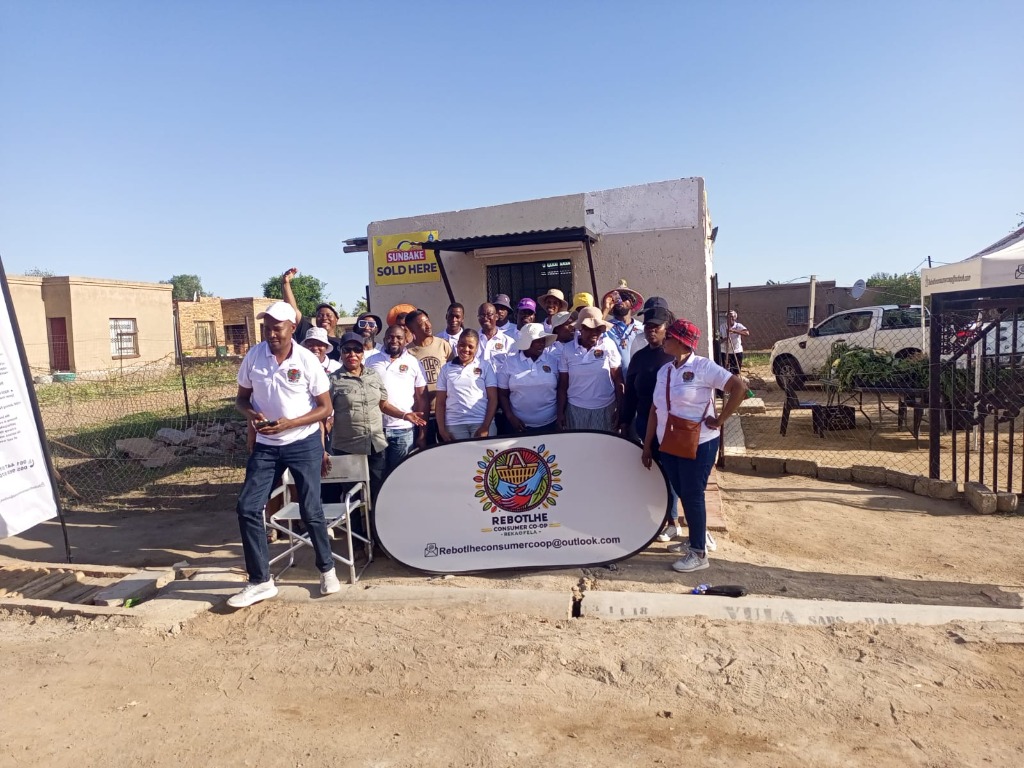
Nowhere is the ownership question clearer than in townships and villages. Millions of people live in communities where money circulates every day: spent on food, electricity, transport, airtime, school uniforms, and household goods. But most of this spending leaves the community almost immediately. Retail chains, banks, and external suppliers capture the value.The township and village economy is not empty. There is money. There is demand. There is labour. There are skills and social networks. But these are not organised into collective economic power. Communities remain markets for others rather than owners and controllers of their own economic systems.A community-owned store is not just a shop. It becomes a platform for local procurement, women's economic participation, and democratic governance of resources. A village agricultural co-operative is not just a farming project. It links household production to collective storage, processing, and market access. A financial co-operative is not just a service. It is a community-controlled instrument for savings, affordable credit, and protection from predatory lending.When a community owns its own store, its own farm, its own buying club, its own financial institution, surplus does not simply leave. It circulates. It builds assets. It strengthens collective organisation.